TL;DR
- From about 12:45 UTC on November 10, an attacker used stolen GitHub credentials from 4,837 accounts to probe 61,764 repositories, then pushed a shell script of about 1,500 lines that steals CI secrets, according to Aikido Security. It ran in more than 1,800 repositories, and in most of them the commit was reverted and the run deleted within about a minute.
- Almost every cleanup guide starts with "rotate your secrets." The script was written to outlast that step. It tries to rewrite AWS role trust policies so that any AWS account can assume the role, to create long-lived IAM keys, and to add Azure federated credentials that trust the compromised repository.
- Some of the stolen credentials came from an integration, not a person. Fly.io says its deploy-from-GitHub process left GitHub App tokens in
.git/configfiles that some customer apps served publicly, and GitHub's bulk revocation of those tokens stopped partway. Rotating secrets cleans up the strings that were stolen. The bigger job is checking who your cloud now trusts.
At 09:17:23 UTC on November 11, a commit landed on the default branch of drunomics/nuxtjs-drupal-ce, an open source project on GitHub. It arrived under the name of the project's own bot account, drubot. A workflow started. Twelve seconds later, a second commit with the message ci: restore reverted it. Then the workflow run that had just executed, run #1964, was deleted along with its logs.
The project's Actions history, as researchers found it, jumps from #1963 straight to #1965. The attacker's commit and its revert are both still in the git history, as Semgrep researchers Katie Paxton-Fear and Diptendu Kar noted in their reconstruction of the attack, but nothing there says what happened in between. In their words: "That missing run number is the only sign it did."
What ran in those twelve seconds was a shell script that names itself wfx. Aikido Security, which named the wider operation "wfx-loot" after the attacker's own labels, counted 4,837 compromised GitHub accounts opening probe pull requests in 61,764 repositories, and more than 1,800 repositories where the payload ran and credentials were sent out. StepSecurity, Semgrep, GitGuardian, SafeDep and the Cloud Security Alliance published their own analyses and data within days. Their findings line up on the basics: there is no sign that anyone exploited a bug in GitHub. Someone held a large pile of working credentials and used them exactly the way their owners would.
The response has settled into a familiar shape. Find the probe pull request, check for the commit messages, and rotate every secret the affected workflows could reach. That advice is correct, and it is also the frame worth breaking. It treats the breach as a list of strings that were copied, which you fix by issuing new strings. This piece explains how the stealer works, why its most lasting damage sits in a place secret rotation never touches, where the stolen credentials came from (including one integration's very public mistake), and what a team that runs automation on GitHub should check this week.
From a stolen token to a cloud session
Start with the probe, because it is almost comically small. Each one is a pull request titled docs: dependency audit notes, opened from a branch named wfx-docs, adding a two-line file called docs/wfx-audit.md. Semgrep reports that the file was byte-identical in every pull request researchers checked. The pull request does nothing by itself. It answers one question for the attacker: can this token write to this repository?
Why go to CI at all, when the attacker already holds a token with write access? Because, as Semgrep's researchers put it, a stolen GitHub token cannot read your repository secrets. The API never hands back a secret's value. A workflow, though, runs with those secrets in reach. "So in practice, write access to your repo means access to your AWS keys."
Where a probe succeeded, the attacker came back with the payload, hidden in one of four places that StepSecurity and Semgrep both documented. It could be two steps added to an existing workflow, labeled "Pass runtime" and "Restore cache" followed by four characters, under the commit message ci: refresh build cache. It could be pasted onto the end of a shell script that CI already runs, which is what happened to Nextcloud. It could be a new workflow on a throwaway branch. Or it could be a hidden .ci- script plus a one-line postinstall hook in package.json, so that any npm install runs it.
Once running, the script collects. Every secret and variable the workflow can see arrives through two JSON dumps, one of secrets and one of variables. It reads the memory of the GitHub Actions runner process, Runner.Worker, where secrets sit decrypted, including ones the workflow never asked for. It sweeps credential files for AWS, Azure, Google Cloud, Docker, Kubernetes, npm, PyPI, SSH, Vault and Terraform, plus shell histories. Aikido's list of AI targets reads like an inventory of the modern developer toolchain: OpenAI, Anthropic, Gemini, Hugging Face, Cursor, Copilot, Codex, Continue, Codeium, Aider, Weights and Biases and Ollama. If your team has been wiring AI agents into its pipelines, those keys were on the menu.
Then it escalates, and this is the step that matters for everything that follows. The script asks GitHub for OpenID Connect tokens addressed to AWS, Google Cloud and Azure, and exchanges them for cloud sessions.
Here is what that exchange is, in literal terms. Since October 2021, when GitHub's changelog announced "secure cloud deployments with OpenID Connect," a workflow can request a short-lived token from GitHub that describes itself: which repository, which branch, which environment. It is a signed JWT. Your cloud account checks that token against a rule you wrote in advance. In AWS the rule is an IAM role's trust policy. In Azure it is a federated identity credential on a Microsoft Entra ID application. If the claims match, the cloud hands back temporary credentials, and no long-lived secret has to be stored in GitHub at all.
It is a bit like a building that stopped handing out keys and hired a doorman with a guest list instead. Nobody carries a key that can be copied. The doorman checks each visitor's badge against the list, and the list says who gets in.
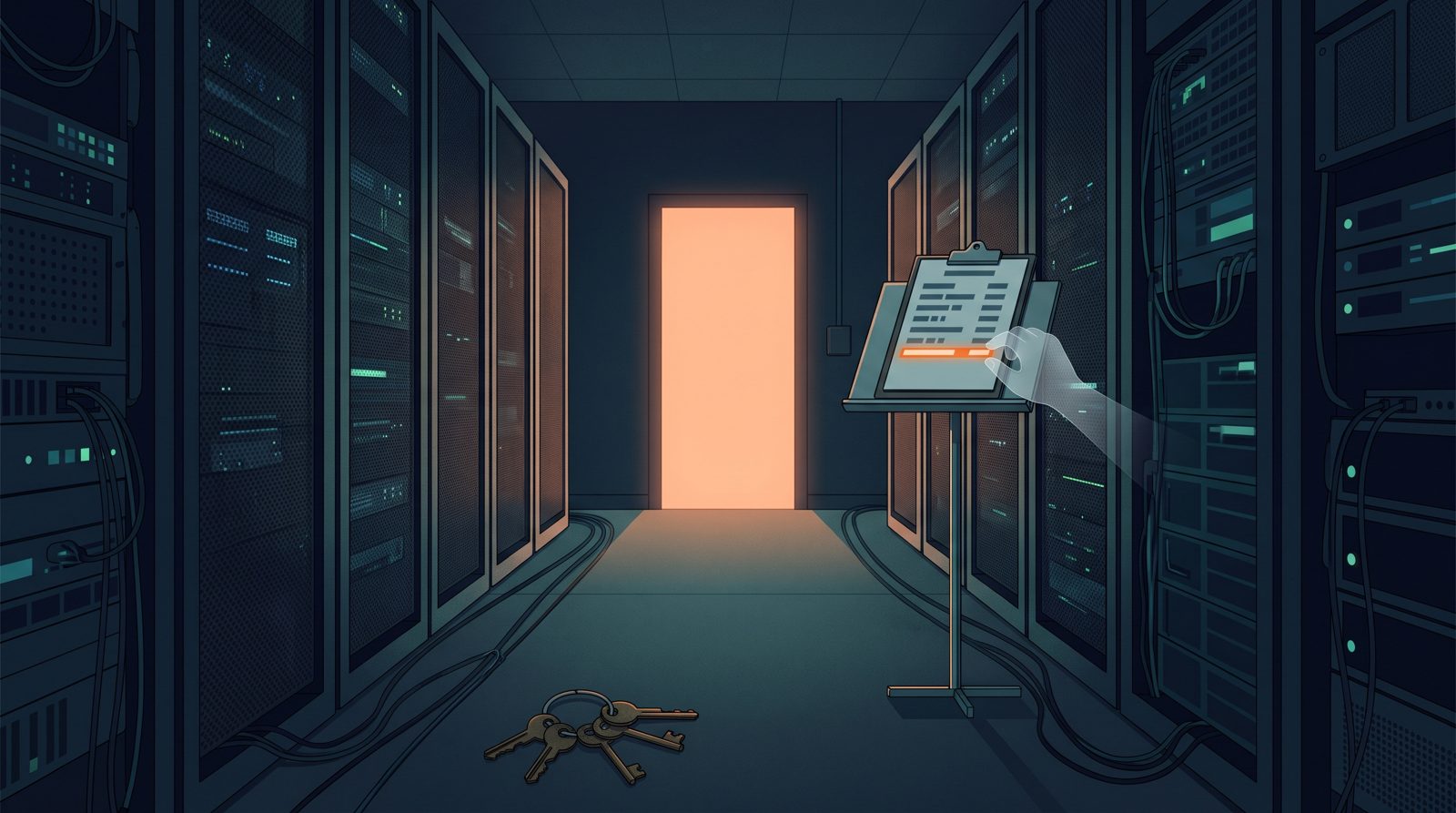
OIDC did not remove trust from your pipeline. It moved trust out of a secret store and into a list.
Rotation changes the locks. wfx edits the guest list
The script's authors understood that move better than most of the people defending against it. After collecting and escalating, the payload runs a stage that Aikido describes as three actions "designed to outlast credential rotation." Two of them go straight at the guest list.
In AWS, the script rewrites the trust policy of a role it has chained into so that the principal reads "AWS": "*". That opens the role to any AWS account, unless a condition elsewhere in the policy narrows it, as the Cloud Security Alliance's research note points out. It also calls iam:CreateAccessKey to mint long-lived access keys for IAM users, and its sessions carry names that start with wfx-. In Azure, with a Microsoft Graph token, it adds federated identity credentials named wfx-ci- plus a number to Entra ID applications, pointing back at the compromised repository. In Aikido's words, any workflow in that repository "can then authenticate to Azure without a stored secret, even after every token has been rotated."
Semgrep put the same point more bluntly: "Rotate every key you like; that door stays open." Chainguard's write-up says it in operational language: "Rotating secrets alone does not remove a trust policy or a federated credential."
The analogy needs one honest limit. The Azure entry names a repository, so it only helps the attacker while someone can still run a workflow in that repository. That is a narrower door than the AWS wildcard, which needs nothing from GitHub at all. But this campaign is in the business of collecting people who can write to repositories: thousands of accounts, bots with special rights, and a batch of integration tokens whose revocation had stalled as of Fly.io's last update. GitGuardian's Gaetan Ferry draws the conclusion that matters: rotating the stolen secrets "is not enough," and the GitHub credential that allowed the push "has to be found and revoked too."
The third persistence trick shows how carefully the script was built, even though its use is disputed. Aikido and Semgrep describe the payload posting forged "success" statuses on its own commit, under the names of the repository's required checks, so that branch protection treats the commit as having passed. Aikido explains why that can work: branch protection "matches on the context name, not on the app that posted it." GitHub's documentation confirms the escape hatch. You can select an app as the expected source of a required check, and "if the status is set by any other person or integration, merging won't be allowed." StepSecurity, however, found the feature switched off in all 101 copies it examined, and heise reported that SafeDep's samples did not have it enabled either. So the code could do it, but how often it actually ran is unknown.
A secret is a string you can replace. A trust policy is a sentence about whom you believe, and this script was written to edit the sentence.
Where the stolen credentials came from
For most of the campaign, nobody knows. Semgrep's researchers write that how the attacker first obtained the tokens "remains unknown." What researchers can see is that many of the credentials had been stolen before. GitGuardian found that 431 of the accounts used in the campaign, about 20%, had already been compromised in GhostAction, an earlier and separate campaign. Aikido found that accounts hit by GhostAction were significantly more likely than baseline to be hit again, and Aikido and Semgrep both report more than 100 repositories where GhostAction's malicious workflow files were still sitting a month later. wfx was injected straight into them. GitGuardian adds that in several repositories, GhostAction's old workflow still ran on the new wfx commits. Tooling from two campaigns, which researchers assess as likely belonging to different actors, was running in the same pipeline at once.
Semgrep's summary of that failure fits on one line: "A rotated token is a worthless token."
One source of credentials is known, and it is the part of this story that should make anyone who builds integrations uncomfortable. StepSecurity noticed that on 173 probe pull requests, opened from 19 accounts, GitHub's own records showed the request coming through the Fly.io GitHub App. The pull requests still listed the account owner as the author. Each burst created pull requests for four to seven accounts within a second or two, which StepSecurity read as one operator working through a pool of tokens in parallel. Its team, credited by name in Fly.io's notice as Ashish Kurmi and colleagues, contacted Fly.io directly.
Fly.io's security notice, posted to its community forum on November 12, explains the leak plainly. When an app was deployed from a GitHub repository through the Fly.io dashboard or automatic deploys, the deploy process left a GitHub access token in the .git/config file of the build directory. Some apps copy their whole build directory into the image and serve it over HTTP. For those apps, anyone could fetch the file, token included, from the app's public address. The tokens were the ones GitHub issues to the Fly.io app when a user connects their account, and they reach every repository the user can access where the app is installed, with write access to contents, Actions and pull requests. On the affected accounts, Fly.io counted more than 250 probe pull requests.
Fly.io says its own systems were not breached, that tokens from "a small number" of accounts were used, and that it has changed the deploy process so the token is no longer written into the build directory and .git is left out of images built from GitHub. It also started revoking every user token issued to its GitHub App. The next day it posted an addendum: not all tokens had actually been revoked. GitHub support had acknowledged that the process "had started and then stopped partway through," and GitHub was looking into why. The Fly.io staff member who posted the addendum guessed that it was related to a large Microsoft outage the day before. GitHub had not commented on the campaign in the coverage we reviewed through November 13, and its public changelog for the week carried nothing about it.
The bots tell the same story from another side. In both the drunomics and WebdriverIO cases, the account the attacker used belonged to automation. At WebdriverIO, two chore: add ci helper commits arrived as wdio-bot, an account allowed to bypass branch protection. A contributor spotted them within 20 minutes, and StepSecurity reports that the same bot pushed 56 such commits across 28 WebdriverIO repositories, with no package release affected. Twenty minutes is a fast human response, and it is still slow against a payload built to finish and clean up in seconds.
Chainguard's write-up calls wfx-loot "a credential theft campaign, not a flaw in GitHub Actions itself." That is accurate, and it is also where the framing goes soft. If the whole attack rests on credentials, then the most important platform feature is the one that kills a whole class of credentials at once. Last week, for one integration's tokens, that feature stalled partway.
The campaign did not need a vulnerability. It needed credentials that still worked, and every "Connect GitHub" button in the integration economy mints more of them.
Anatomy of a wfx run, as documented by Aikido, StepSecurity and Semgrep
- The probe. A pull request titled
docs: dependency audit notesfrom awfx-docsbranch, addingdocs/wfx-audit.md. If it opens, the token can write. - The payload. About 1,500 lines of plain, heavily commented shell, delivered as injected workflow steps, an appended shell script, a throwaway workflow on a
chore/branch, or a hidden script behind an npmpostinstallhook. - The gate (sometimes). Forged success statuses under required check names. Present in the code, switched off in every copy StepSecurity examined.
- The collection. All secrets and variables, the job's
GITHUB_TOKEN, runner process memory, cloud and registry credential files, AI provider keys, shell histories. - The escalation. OIDC tokens exchanged for AWS, Google Cloud and Azure sessions, then role chaining, service account impersonation and replayed Azure CLI refresh tokens.
- The foothold. AWS trust policies opened to any account, new long-lived IAM keys, and Azure federated credentials named
wfx-ci-that trust the compromised repository. - The shipment. One gzipped archive, sent over plain HTTP to attacker servers. Newer copies, from about 05:30 UTC on November 12, sent it only to a Telegram chat.
- The erasure. A
ci: restoreorci: cleanuprevert, then the workflow run and its logs deleted. What remains is a gap in the run numbers.
The guest list nobody reads
The reason wfx goes after trust configuration is that almost nobody watches it, and there is research that shows how long this blind spot has existed. In research published in July 2023, Christophe Tafani-Dereeper of Datadog Security Labs looked at how teams had actually configured the trust between GitHub Actions and AWS. By searching GitHub workflow files for role identifiers, his team gathered more than 500 unique IAM role ARNs from more than 275 AWS accounts. The flaw they hunted for was a missing condition on the token's sub claim, the line that says which repository may assume the role. Without it, the write-up explains, "a GitHub Action from any GitHub repository can assume the role."
They found such roles. The clearest example sat in the AWS environment of a UK government body, in a role defined in the public alphagov/govuk-infrastructure code and meant to mirror repositories. Untrusted workflows could assume it and gain pull and push access to every CodeCommit repository in the account. In that case the cause was not a misunderstanding of OIDC. A duplicated StringEquals key in Terraform meant that the last occurrence won, silently overwriting the subject check. It was fixed fewer than 26 hours after Datadog's report. Datadog has since added a note that, as of June 2025, AWS automatically blocks the creation of roles with that vulnerable pattern, while roles that already existed keep it.
That detail is the whole problem in miniature. The guardrail Datadog describes stops new roles from being created with one specific vulnerable pattern. wfx does not create a role. It edits the trust policy of a role that already exists, with a valid session, through the normal API, and the opening it writes is a different shape altogether.
Microsoft's own documentation for federated identity credentials shows how much weight these objects carry and how little ceremony surrounds them. Anyone with permission to create an app registration and add a secret or certificate can add one. An application can hold up to 20 of them. The subject has to match the incoming token exactly, and a credential's name cannot be changed once it is created. That last rule is quietly useful to defenders: a credential named wfx-ci- something will keep that name until somebody deletes it.
Trust configuration is written once, reviewed never, and trusted forever. That is the profile of an excellent hiding place.
Every fix moves the attacker one file over
Stealing secrets from CI is not new. In April 2021, Codecov disclosed that someone had altered its Bash Uploader, a script its customers' pipelines downloaded and ran, so that it sent the CI environment's variables to a third-party server. According to Codecov's notice, the altered script was in use during 108 windows of time between January 31 and April 1, 2021. A customer caught it on April 1 by checking the script against its published checksum. The lesson then was that CI holds the keys, and anything that runs there can read them.
GitGuardian has tracked the more direct version of that idea for over a year. In September 2025 it named GhostAction, a campaign that injected malicious workflows and exfiltrated at least 3,325 secrets from 817 public repositories across 327 GitHub users. In October 2026, its researchers wrote that "GhostAction never really stopped": a wave between October 8 and 12, with its biggest spike on October 8 and 9, targeted more than 30,000 repositories across about 3,000 users and organizations, after compromising about 1,900 accounts, and tried to extract 3,174 secrets. GitHub started preventing that malicious workflow from running on October 9, and later batches got nothing. GitGuardian also traced a small wfx precursor to October 24 through 29, before the mass wave began on November 10.
The platform's defenses are improving, and wfx shows exactly where they end. GitGuardian found that GitHub held the forms of the payload that lived in a workflow file: every November payload run it could still observe sat in an action_required state and never started. The npm hook went around it, because it changed no workflow file. The repository's own unchanged workflows ran npm install, and the install ran the hidden script. "GitHub held the workflow forms, but an npm hook slipped past the hold and ran," as Ferry summed it up in GitGuardian's analysis. The Nextcloud case went around it a different way, by appending to a shell script the workflow already called.
The same ratchet is turning elsewhere. GitHub is already tightening pull_request_target, the trigger behind years of so-called pwn requests, and each fix closes a route an attacker has already used. Semgrep's diagnosis explains why the routes keep appearing: "GitHub Actions sits somewhere between code and infrastructure, so it gets reviewed like neither."
Every check that inspects one file teaches the attacker which file to avoid.
Four counts, and the number nobody can see
The figures in this story are real, but they come from different teams counting different things at different moments, so they should not be added together or treated as one tally.
Aikido's GitHub search returned 61,839 probe pull requests opened between 12:45 UTC on November 10 and 15:00 UTC on November 11, and its own data put the source at 4,837 accounts and the targets at 61,764 repositories. Of those pull requests, 10,431 went into repositories the account did not own, reached through collaborator or organization access, and 92% were still open when it published. That last number suggests most owners had not noticed. StepSecurity counted more than 63,000 probe pull requests by 07:40 UTC on November 12 and more than 21,000 commits titled ci: refresh build cache, and it took apart 101 copies of the payload. Of those, 57 sent data over HTTP, 1 used HTTP with a Telegram backup, and 43 used Telegram alone. SafeDep counted 8,093 repositories that received malicious commits. In the breakdown cited by the Cloud Security Alliance and Barrier Networks, most received the ci: refresh build cache form (7,309), followed by the npm hook (771) and the new workflow file (16). GitGuardian's search on November 12 returned 66,001 probe pull requests, and its own dataset holds 28,500 payload patches from 2,367 accounts across 17,715 repositories.
The hardest number is the one that matters most: how many runs actually executed and sent something out. The attacker deletes runs, so the evidence is usually an absence. GitGuardian looked at 65 November injection commits and found a gap in the run numbers at 37 of them, and it warns that a gap proves a run was created, not that it executed. Semgrep notes that the floor of about 1,800 repositories counts only the places where evidence survived, and Aikido points out that the script has dedicated settings for private repositories. That suggests it may be running where no outside researcher can look.
Nextcloud's run is the clearest look anyone has. Its docker repository, with about 7,400 stars, ran the appended update.sh three seconds after the commit, on a self-hosted runner. The attacker's cleanup failed, so the log survived. It shows the script packing an 8,971-byte archive, uploading it on the first attempt, and the job finishing green. A Nextcloud developer reverted the commit 27 minutes later. The same log also shows something reassuring: the line oidc_discovery arn=none gcp=none azure=none, which reads as the script finding no AWS, Google Cloud or Azure identity to exchange into in this case. The foothold stage depends entirely on what your workflow is trusted to do.
Probe counts measure reach. Run-number gaps measure attempts. Nobody outside the victims can measure what left.
The witness the attacker cannot delete
This is where the story stops being about GitHub and becomes about the event plumbing many teams already run. The attacker could delete run #1964 from GitHub. It could not reach back into systems that had already been told about it.
GitHub emits webhook events for exactly this activity. A workflow_run event fires when a run is requested, when it starts on a runner, and when it completes. A workflow_job event fires when a job is queued, waiting for approval, in progress and completed. A status event fires whenever the status of a commit changes. All of them can be delivered at the organization level. A receiver that verifies each delivery and writes it to durable storage before doing anything else (the receive, verify, enqueue and acknowledge pattern behind resilient webhook receivers) holds a record that a stolen GitHub token cannot erase. It would show a run that GitHub no longer shows, against a commit that was reverted seconds later, which is precisely the signature of this campaign.
The status event is worth special attention. A success status for a required check, posted by a sender that is not the app that normally posts it, is the forged-gate trick seen from the outside. Chainguard's checklist recommends looking for check results "posted by an unexpected app or token." A team whose merge rules feed release gates can watch for exactly that event and alert on it.
Two caveats keep this honest. First, this kind of record is only as good as the receiver. Deliveries can arrive late, and GitHub's webhook pipeline has had a rough few weeks of delays, so a receiver that throws away events it cannot act on immediately keeps nothing. Make it idempotent by delivery ID and keep everything. Second, webhooks are not the only witness. Fly.io told customers to look for deleted runs in their GitHub security log. The Cloud Security Alliance's note argues that this campaign's anti-forensic design makes the case for streaming GitHub audit logs and workflow-run metadata to an external, tamper-resistant store, because once attackers can delete run logs, "evidence that never left GitHub" cannot be relied on. The principle is the same either way. A system that is event-driven rather than polled heard about the run when it happened, while one that checks the run list later finds a clean history.
An attacker with your token can edit your history on GitHub. It cannot edit what GitHub has already told your own systems.
What we know, and what we don't
Several things are well established, because multiple teams documented them from the attacker's own commits: the probe, the four delivery forms, the collection and escalation logic, the persistence code, the revert-and-delete cleanup, and the switch to Telegram on November 12. The Fly.io token leak is confirmed by Fly.io itself.
Other things are not. Nobody has published how most of the tokens were stolen. The forged status feature appears in the code, but StepSecurity found it disabled in every copy it studied, while Aikido and Semgrep describe it running. None of the public write-ups we read names a victim whose AWS or Azure account was actually backdoored. The persistence is documented from the script, and whether it succeeded depends on what each workflow was allowed to do in the cloud. Aikido assesses that wfx-loot and GhostAction are distinct campaigns run by different actors, citing different infrastructure, tooling and tradecraft, along with Indonesian-language comments in newer wfx versions that it never saw in GhostAction. StepSecurity cautions that shared accounts do not prove a single actor. And because the script carries settings for private repositories, every public count in this article should be read as a floor.
What to check if your automation runs on GitHub
- Find the probe first. Search every organization you belong to for pull requests titled
docs: dependency audit notesand branches namedwfx-docs,chore/followed by eight characters, orci-check-followed by four digits. Every account that opened one is compromised, whether or not a payload followed. - Read the gaps, then confirm them. Look for missing run numbers right after commits titled
ci: refresh build cache,chore: add ci helperorchore: add dependency audit workflow. A gap means a run was created. The audit log, or your own stored webhook deliveries, can tell you whether it was approved and executed. If you cannot tell, assume it ran. - Revoke the credential that pushed, not only the secrets that were read. That means personal access tokens, OAuth grants, GitHub App authorizations and SSH keys for the account, and a hard look at every bot that can bypass branch protection.
- Audit the guest list, not just the key ring. In AWS, look for role trust policies that accept any principal, IAM access keys created since November 10, and sessions whose names begin with
wfx-. In Azure, list federated identity credentials on your Entra ID applications and delete any namedwfx-ci-. In Google Cloud, reviewgenerateAccessTokenandsignJwtcalls. Check Vault and Kubernetes logins that came from workflow tokens. - Make trust changes loud. An edit to a role trust policy or a new federated credential should page someone, because in most teams legitimate changes are rare. Scope OIDC trust to specific repositories, branches and environments, and put deploy credentials behind approval-gated environments.
- Pin required checks to the app that should post them. GitHub lets you select the expected source of a status check, and a status from anyone else then blocks the merge.
- Fence the runner's egress. Semgrep's advice is short: "Allowlist egress from CI." No build needs to talk to a bare IP address or to Telegram. It is the outbound version of the IP allowlists that Shopify has just made mandatory for public apps calling its Admin API. Where you can, run
npm ci --ignore-scriptsso that an install cannot execute a hook. - Check what your integrations leave behind. If you deployed an app from GitHub through Fly.io's dashboard, request
/.git/configon your app's public address. If it returns a file, add.gitto.dockerignore, redeploy, and rotate anything ever committed to that repository. The same question applies to every platform that clones your code: where does the token go after the clone?
Locks and guest lists
For years the advice about CI secrets has been about the key ring: fewer keys, shorter-lived keys, keys in a vault, keys rotated on schedule. OIDC was the logical end of that advice, and it was a real improvement. It got rid of most of the keys. What it did not do, and was never meant to do, was make anyone read the guest list.
wfx is a large campaign built squarely around that gap. It treats your secrets as loot and your trust configuration as territory. The first can be replaced on a Monday morning. The second has to be found, line by line, in places most teams have not opened since the day they set them up.
So the useful question after the past week is not only "what did they take?" It is "whom does our cloud trust today that it did not trust on November 9?" A team that can answer that from a diff, an alert and a stored event stream has absorbed the lesson. A team that can only answer it by rotating everything again and hoping is still changing the locks while the guest list stays open.
FAQ
How can I tell whether the wfx payload ran in my repository?
Look for the probe pull request titled "docs: dependency audit notes" or a wfx-docs branch, then for a gap in the workflow run numbers right after one of the campaign's commit messages. A gap shows a run was created. Your audit log, or webhook deliveries you stored at the time, can show whether it executed. If you cannot rule it out, treat it as having run.
Is rotating my GitHub Actions secrets enough?
No. Researchers at Aikido, Semgrep, Chainguard and GitGuardian all warn that rotation alone does not finish the job. You also need to revoke the GitHub credential that pushed the payload and check your cloud accounts for changed AWS trust policies, new IAM access keys and Azure federated credentials named wfx-ci, which survive rotation.
Was this a vulnerability in GitHub?
The researchers who documented it describe a credential theft campaign, not a flaw in GitHub Actions: the attacker used valid tokens the way their owners would. According to GitGuardian, GitHub held every payload run in a workflow file that it could still observe, but an npm install hook and appended shell scripts went around that hold.
I deploy to Fly.io from GitHub. What should I do?
Sign in to Fly.io with GitHub again to reconnect, check the repositories the Fly.io app can reach for the campaign's markers since November 10, and request /.git/config on your app's public address. If that returns a file, exclude .git from your image, redeploy and rotate any credentials ever committed to the repository. Fly.io says deploys with flyctl and Fly.io API tokens were not affected.